

Production Chemicals
We are committed to extending equipment lifecycles, optimizing production processes, and reducing costs through our tailored solutions. Pars Lian develops and formulates products specifically to suit the customer requirements and their critical applications. This customization is complemented by our dedicated field service team, ensuring that every solution is effective and supported by continuous research and development. We call this approach "tailor-made solutions," underscoring our commitment to delivering precise and impactful support for our clients in the petroleum industry.
Flow Assurance
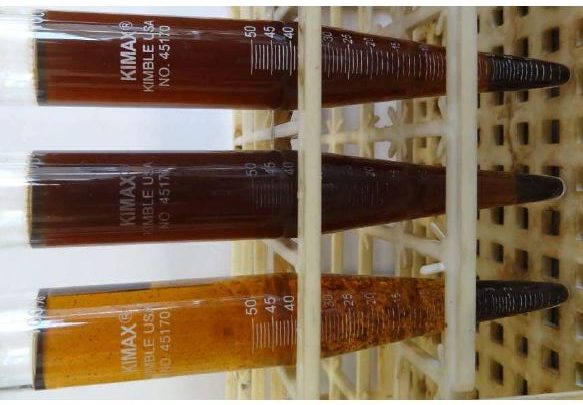
Asphaltene Inhibitor
Asphaltene Inhibitor When asphaltenes are present in crude oil, they can cause severe processing problems at any point, from the formation to the refinery.
Read More
Destabilization of asphaltene molecules in crude oil can lead to precipitation of asphaltenes, resulting in them adhere to pipe walls and partitioning in the oil-water interface. Petroleum asphaltenes are best defined as a solubility class of the heavy components in crude oil that are insoluble in a non-polar solvent such as pentane and hexane. Paraffin, saturates, and aromatics are soluble in pentane and hexane. Asphaltenes are soluble in aromatic solvents. Asphaltenes are insoluble in most crude oils and are present in crudes as colloidal micelles, that is, clusters of asphaltene molecules. Figure below illustrates asphaltenes in a crude oil. These micelles will deposit from the bulk fluid unless inhibited from doing so by stabilizers present in the crude. Naturally occurring stabilizers known as resins and maltenes act to stabilize, or peptize, the asphaltene micelles. Resins and maltenes have somewhat similar structures to that of asphaltenes but have much lower molecular weights. Crudes with high resin content are more stable and are less likely to deposit asphaltenes. Under stable reservoir conditions the asphaltenes, resins, maltenes, and the oil are in a thermodynamic equilibrium. When this equilibrium is disturbed and the resins are disassociated from the asphaltenes, flocculation of the asphaltenes often occurs. Flocculated asphaltenes cause the production problems. Like asphaltene structure, the mechanism of asphaltene deposition is complex and difficult to define. Asphaltene precipitation is strongly influenced by the interaction between asphaltenes and other components of the oil. Asphaltene deposits form by a different mechanism than paraffinic deposits. Three types of equilibrium changes can occur to alter the stability of asphaltene micelles: chemical changes, mechanical changes, or electrical action.

Wax Inhibitor
Wax Inhibitor both crude oil and gas condensate contain paraffinic components known as wax. Paraffins are naturally occurring organic molecules composed of carbon and hydrogen.
Read More
Wax Inhibitor both crude oil and gas condensate contain paraffinic components known as wax. Paraffins are naturally occurring organic molecules composed of carbon and hydrogen.
Hydrate Inhibitor
Low Dosage Hydrate Inhibitor (LDHI) is a general name for recent additives which protect against hydrate risk in flow lines at a relatively low amount (~1 to 2% vs. water, i.e. 10,000 to 20,000 ppm) when compared to the well-known thermodynamics hydrate inhibitors such as glycols or methanol whose efficient dosage are in the range of tens of Percent.
Read More
Low Dosage Hydrate Inhibitor (LDHI) is a general name for recent additives which protect against hydrate risk in flow lines at a relatively low amount (~1 to 2% vs. water, i.e. 10,000 to 20,000 ppm) when compared to the well-known thermodynamics hydrate inhibitors such as glycols or methanol whose efficient dosage are in the range of tens of Percent.
Drag Reducer Agent
Wax Inhibitor both crude oil and gas condensate contain paraffinic components known as wax.
Read More
Paraffins are naturally occurring organic molecules composed of carbon and hydrogen. They have the general formula CnH2n+2 and may exist structurally as linear chains (n-alkanes), branched chains, or cyclic compounds. The concentration, structure, and molecular weight range of these paraffins varies considerably from one hydrocarbon source to another. Paraffins have only limited solubility in the crude unless the temperature of the oil is above the Wax Appearance Temperature (WAT). WAT (also called the cloud point) is the temperature at which paraffin first begins to crystallize. Paraffin is assumed to be in solution under reservoir conditions or at temperatures above the WAT. However, if these conditions are altered, the paraffin can precipitate from the crude and adhere to the surfaces of the system. Wax is defined as a deposit composed of paraffins and other hydrocarbons that get trapped within the paraffin matrix. These “other” hydrocarbons may include crude oil and asphaltenes. A wax inhibitor product for downhole and flow lines must address all aspects that help to mitigate wax related flow assurance issues: restrictions due to deposition, flow challenges due to increased viscosity at low temperatures and re-start conditions following shut-downs to avoid gelling and plugged lines. The key problems caused by wax that concern oilfields are:
- Deposition — Wax deposits restrict flow and reduce throughput onshore as well as offshore.
- Viscosity — The viscosity of paraffinic crude oils below the wax appearance temperature can increase greatly, causing flow problems.
- Re-start — Temporary shutdowns are a concern in operations with paraffinic crudes because of the chance that the oil will gel in a flowline or pipeline.